

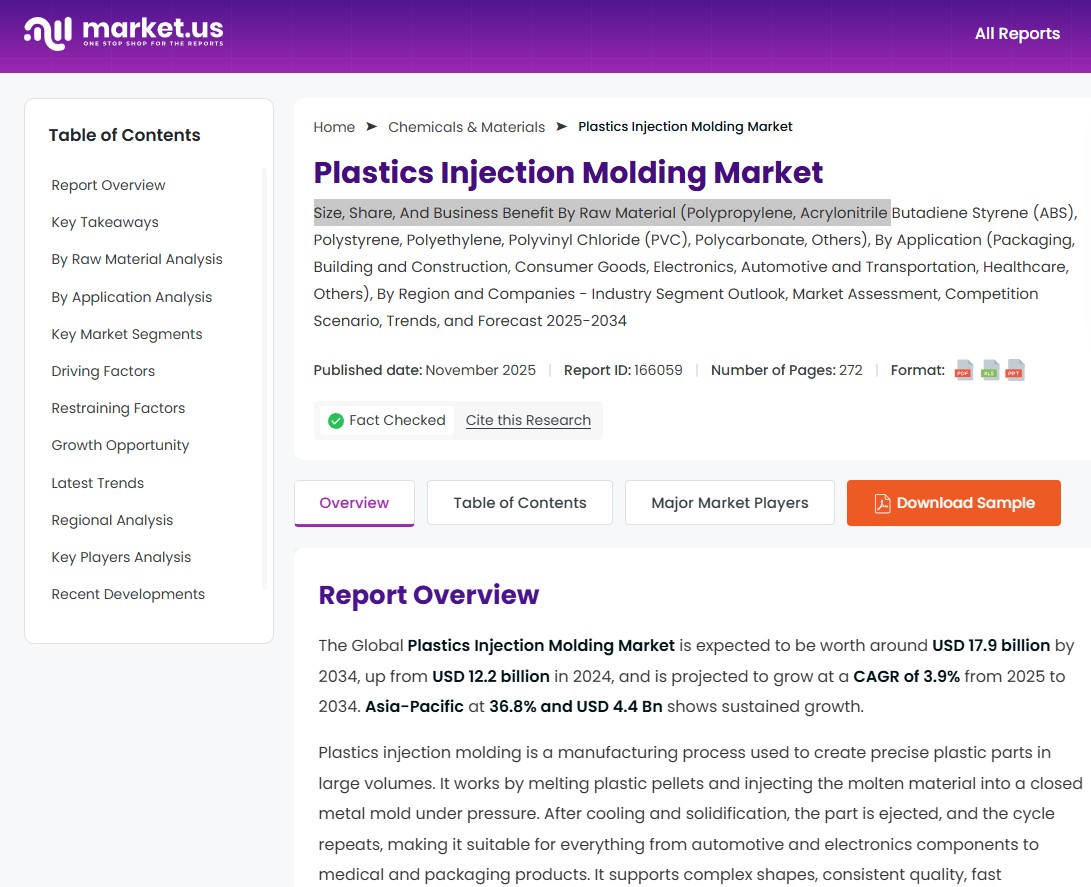
Plastics injection molding is a manufacturing process used to create precise plastic parts in large volumes. It works by melting plastic pellets and injecting the molten material into a closed metal mold under pressure. After cooling and solidification, the part is ejected, and the cycle repeats, making it suitable for everything from automotive and electronics components to medical and packaging products. It supports complex shapes, consistent quality, fast production speed, and compatibility with many plastic types, including polypropylene, ABS, nylon, and engineering-grade polymers.
The plastics injection molding market reflects a wide industrial adoption of lightweight, durable, and customizable plastic components. Its growth is tied to automotive lightweighting, medical disposables, electronics miniaturization, and packaging innovation. Advanced machinery, automation, and recyclable polymers are expanding capabilities, while new capacity investments and recycling initiatives are reshaping supply and sustainability. Rising focus on the circular economy is encouraging post-consumer scrap integration and material recovery.
Article source: Market.Us
The plastics injection molding market reflects a wide industrial adoption of lightweight, durable, and customizable plastic components. Its growth is tied to automotive lightweighting, medical disposables, electronics miniaturization, and packaging innovation. Advanced machinery, automation, and recyclable polymers are expanding capabilities, while new capacity investments and recycling initiatives are reshaping supply and sustainability. Rising focus on the circular economy is encouraging post-consumer scrap integration and material recovery.
Article source: Market.Us
